
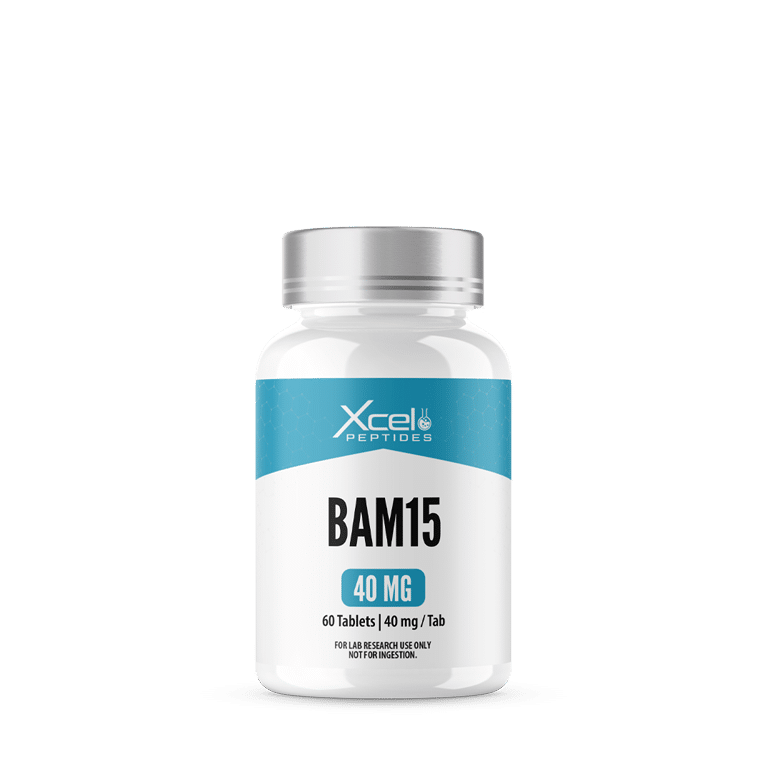
BAM15 from Xcel Peptides
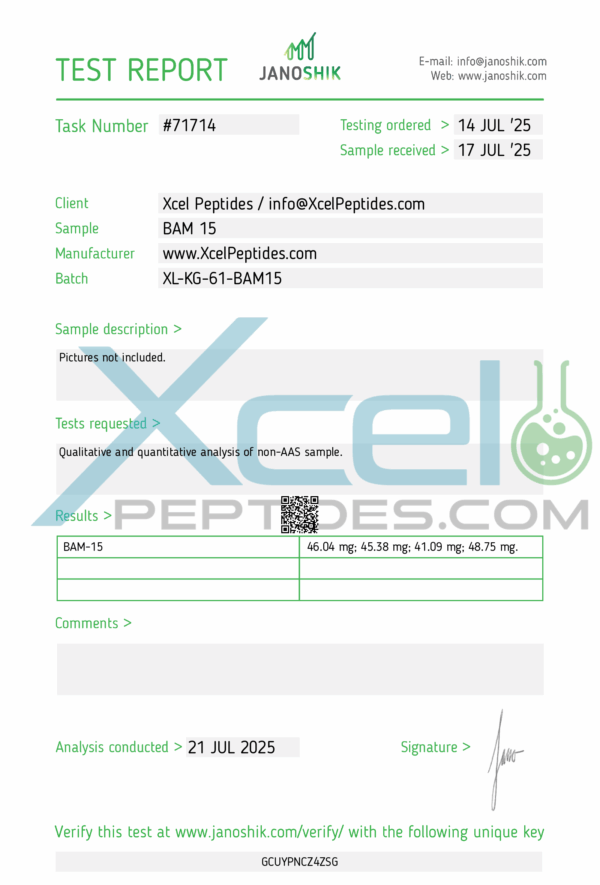
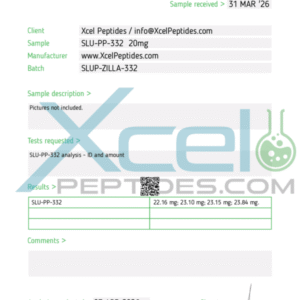
Xcel Peptides supplies BAM15 as an encapsulated research compound for laboratory use. We test every batch independently before release, and we publish the certificate of analysis on this page, matched to the batch number on your bottle.
What Is BAM15
BAM15 is a synthetic small molecule, not a peptide. Its chemical name is N5,N6-bis(2-fluorophenyl)-[1,2,5]oxadiazolo[3,4-b]pyrazine-5,6-diamine, and its CAS number is 210302-17-3. Researchers classify it as a mitochondrial protonophore, meaning it carries protons across the inner mitochondrial membrane. It is a preclinical research compound and not an approved medicine.
Specifications
The product is research grade, supplied as an encapsulated solid. The capsule serves only as a way to contain, store, and measure the material, and it says nothing about how anyone should use it. We verify every batch through third-party HPLC and identity analysis, and we document it with a matched COA. We ship every order with tracking.
Research Applications
Researchers study BAM15 in mitochondrial bioenergetics and cellular respiration research. Typical work measures how the compound dissipates the proton gradient, how that changes oxygen consumption rates in cultured cells, and how the effect compares with other uncouplers in plasma membrane and mitochondrial assays. Scientists also use it as a tool compound to explore how cells respond to changes in mitochondrial coupling.
These describe research applications, not therapeutic claims. The FDA has not evaluated this product, and researchers should not use it to diagnose, treat, cure, or prevent any condition.
Why Buy BAM15 From Xcel Peptides
Purity matters more than usual for a compound that acts directly on mitochondrial membranes, because impurities can skew respiration data. Xcel Peptides tests each batch for identity and purity and publishes the results, so you can confirm the material before it enters an assay.
We also publish our results openly. You can match the batch number on your bottle to the COA before you start work, instead of relying on a generic purity claim.
Storage and Handling
Keep BAM15 sealed, dry, and away from light and heat. Mitochondrial uncouplers can be hazardous if mishandled, so follow your institution’s chemical-safety procedures, wear gloves and eye protection, and avoid creating dust. Record the batch number and opening date in your lab notes.
Verifying Your COA
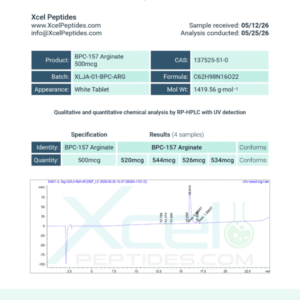
Check three things on the COA before you use this product. First, confirm the batch number matches your bottle. Second, confirm the test date is recent. Third, confirm the HPLC purity and the identity result match the specification for your size. If you need archived data for a previous lot, contact our team and we’ll pull it for you.
Disclaimer (place directly under description): Xcel Peptides supplies BAM15 for laboratory and research use only. It is not a drug, dietary supplement, or food, and researchers should not use it for human or animal consumption, or for diagnostic or therapeutic use. Nothing on this page constitutes medical advice.
Frequently Asked Questions
What is BAM15? It’s a synthetic small-molecule mitochondrial protonophore studied in bioenergetics research. Xcel Peptides supplies it as a research-grade capsule product.
What does a mitochondrial uncoupler do in research? It separates the proton gradient from ATP production, which lets researchers study how cells respond to changes in mitochondrial coupling.
Is BAM15 a peptide? No. It’s a small molecule, which is why it sits in our Tablets & Capsules category.
Is BAM15 FDA approved? No. It’s a preclinical research compound, and Xcel Peptides sells it for laboratory research only.
Does BAM15 come with a COA? Yes. Xcel Peptides ships every bottle with a batch-matched certificate of analysis confirming identity and purity.
How fast does Xcel Peptides ship this product? We ship most orders within 1 to 2 business days, with tracking included.

Reviews
There are no reviews yet.