
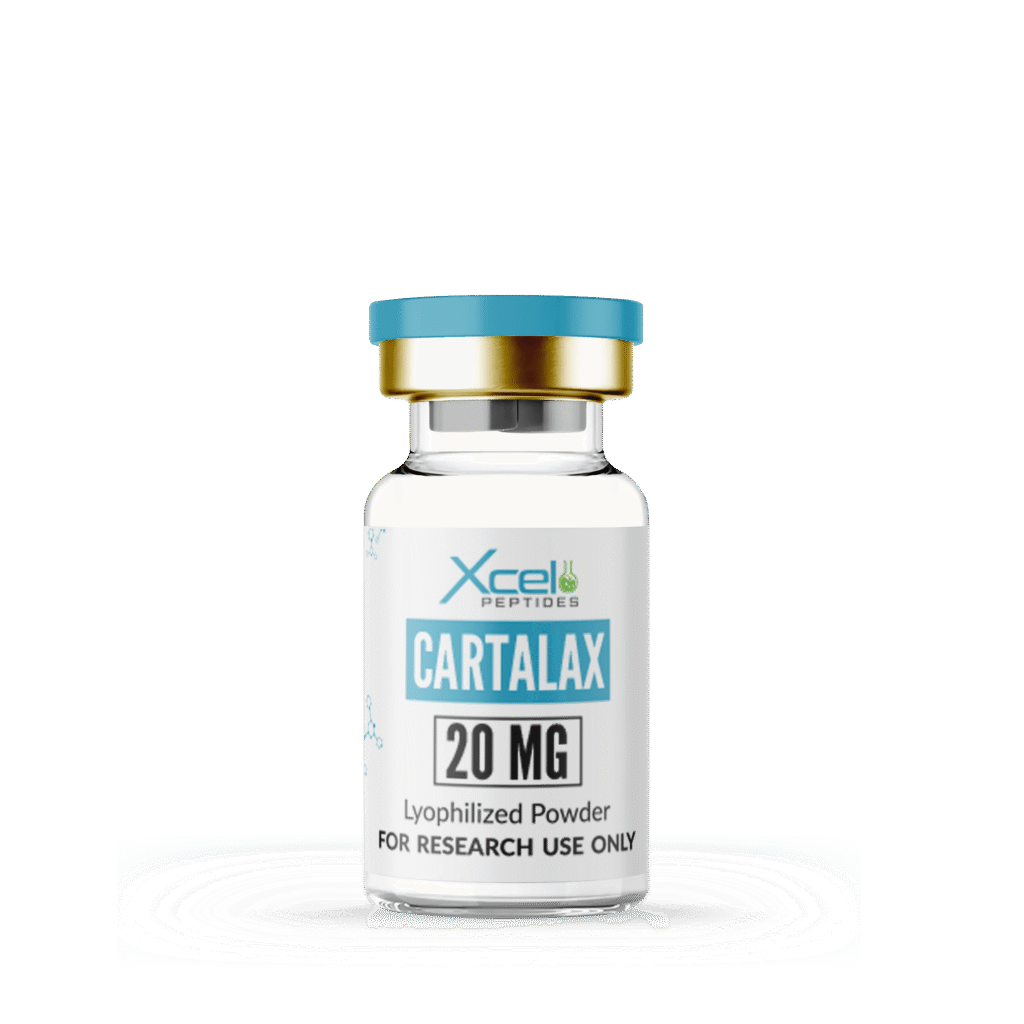
Quick answer: No proven health benefits of Cartalax exist in people. Laboratory studies have examined how this tripeptide (Ala-Glu-Asp) affects gene expression, cell renewal, and aging in cultured cells and animal tissue. Human trials are lacking, and Cartalax is a research compound, not an approved medicine.
Searches for Cartalax peptide benefits return a lot of confident claims. This guide separates what the published research observed from what sellers promise. If you are new to the compound, start with our overview of Cartalax Peptides.
Does Cartalax Have Proven Benefits?
No. No regulator has approved Cartalax for any use, and we found no published human trials showing it improves a health condition. Everything below describes laboratory observations, not outcomes in people.
That distinction matters. A result in a petri dish or an animal often fails to carry over to humans, so treat every claim with that in mind.
What Have Researchers Observed in the Lab?
Studies cited in the scientific literature examine Cartalax in three main settings. Researchers looked at cell renewal in kidney tissue cultures taken from young and old animals. They looked at how skin fibroblasts behave as they age in culture. They also studied gene expression in aging human mesenchymal stem cell cultures.
A 2016 review titled “Short Peptides Regulate Gene Expression” summarized the broader idea behind this work. You can find these references on the Cartalax entry on Wikipedia.
Across these studies, the common thread is gene expression and cell behavior in culture. None of them measured a health benefit in a person.
What About Cartilage and Joints?
The name “Cartalax” points to cartilage because the developing group designed it as the cartilage-linked member of its peptide family. Many vendor pages go further and claim it rebuilds cartilage or relieves joint problems.
Those claims go beyond the evidence. The cartilage-related data we could find comes mainly from the developing group and from supplier summaries, not from independent human studies. Until independent, controlled trials exist, a joint benefit remains unproven.
Where Do Cartalax Benefit Claims Come From?
Most claims trace back to one of four sources. Some come from the developing group’s own lab research. Others come from vendor marketing that turns lab findings into promises. Some come from confusing the pure AED peptide with mixed cartilage-derived capsules. The rest come from stretching animal results to people.
Knowing the source helps you judge the claim. A vendor summary is not a clinical trial.
How Can You Judge a Cartalax Benefit Claim?
Ask five questions before you believe any claim.
- Who was studied? Cells, animals, and people produce very different evidence.
- Who ran the study? Independent teams add more confidence than the group that developed the peptide.
- Was it peer reviewed? Published, reviewed work carries more weight than a product page.
- How large was it? Small studies can mislead.
- Who profits from the claim? A seller has a reason to oversell.
A claim that fails most of these checks deserves skepticism.
What Do Researchers Use Cartalax For?
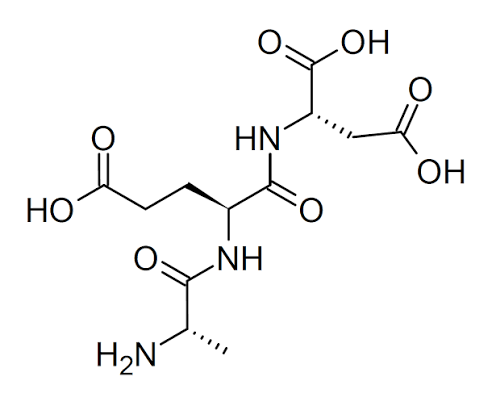
Scientists use Cartalax as a reference peptide in gene expression and cellular aging studies. They compare it with other short bioregulators such as Vesugen (Lys-Glu-Asp) and Pinealon (Glu-Asp-Arg) to see how small sequence changes alter cell responses.
In that setting, the value lies in the data a lab can generate, not in any effect on a person.

Is Cartalax Safe?
No established human safety profile exists for Cartalax, because no one has completed the human trials needed to build one. That is another reason suppliers sell it for laboratory research only.
If you have a joint or cartilage concern, talk to a licensed clinician. Research compounds are not a substitute for medical care.
How Do You Make Sure Research-Grade Cartalax Is What It Claims to Be?
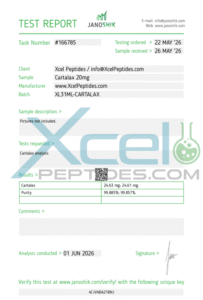
Quality matters for any study, and a certificate of analysis (COA) is your best check. Match the batch number to your vial, look for one clean HPLC peak, confirm the mass spectrometry result fits the AED sequence (about 333.3 g/mol), and check the test date. You can browse reports on our COA page.
Frequently Asked Questions About Cartalax Peptide Benefits
What are the benefits of Cartalax peptide? No benefits have been proven in people. Lab studies have looked at gene expression, cell renewal, and cellular aging in cultured cells and animal tissue.
Does Cartalax help joints or cartilage? That claim is unproven. The cartilage link comes mainly from the developing group’s research and vendor summaries, not from independent human trials.
Is Cartalax approved by the FDA? No. It is a research compound, and no regulator has approved it for any use.
Is Cartalax safe? No established human safety profile exists, because the human trials needed to build one have not been completed.
Why do sellers claim Cartalax has benefits? Some turn lab findings into promises, and others mix up the pure peptide with cartilage-derived capsules. Always check who made the claim and what evidence supports it.
What do researchers actually study with Cartalax? They study gene expression, cell renewal, and aging in cell cultures, often comparing it with other short bioregulator peptides.
Where can I find research-grade Cartalax? Xcel Peptides supplies Cartalax (Bioregulator) for laboratory use, with a batch-matched COA. If you are in the US, see our guide to buying Cartalax in the USA.
Questions About Cartalax Research or Your Order?
If you want help reading a COA, choosing the right size for a study, or checking shipping to your region, ask us. Our team replies within one business day.
Email us at info.xcelpeptide@gmail.com, use the contact form, or browse the Bioregulators category. We would rather give you a straight answer than an exaggerated one.
Disclaimer: Xcel Peptides supplies Cartalax and related compounds for laboratory and research use only. They are not drugs, dietary supplements, or food, and are not intended for human or animal consumption, or for diagnostic or therapeutic use. This article is informational, summarizes laboratory research, and does not constitute medical or legal advice.

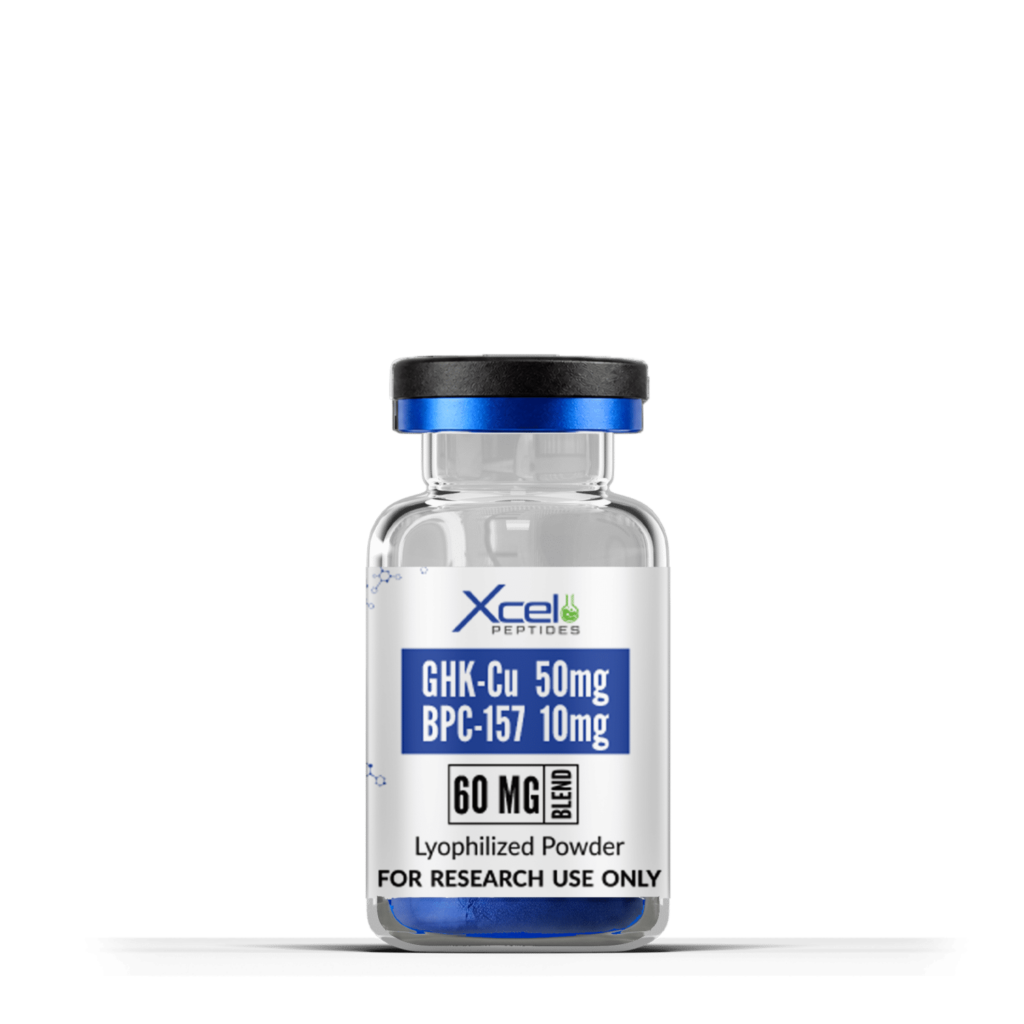
GHK-Cu / BPC-157 Blend 50/10mg
GHK-Cu and BPC-157 are research peptides evaluated together in controlled laboratory settings to examine molecular coexistence, stability, and interaction behavior in non-human research models.
